Showing posts with label Famous Person. Show all posts

Friday, September 21, 2018

Leonardo da Vinci

Leonardo di ser Piero da Vinci(15 April 1452– 2 May 1519) more commonly Leonardo da vinci or simply Leonardo,was an Italian polymath of the Renaissance, whose areas of interest included invention, painting, sculpting, architecture, science, music,mathematics, engineering, literature, anatomy,geology, astronomy, botany, writing, history, and cartography. He has been variously called the father of palaeontology,  ichnology, and architecture, and is widely considered one of the greatest painters of all time. Sometimes credited with the inventions of the parachute, helicopter and tank, he epitomised the Renaissance humanist ideal.


Many historians and scholars regard Leonardo as the prime exemplar of the "Universal Genius" or "Renaissance Man", an individual of "unquenchable curiosity" and "feverishly inventive imagination", and he is widely considered one of the most diversely talented individuals ever to have lived. According to art historian Helen Gardner, the scope and depth of his interests were without precedent in recorded history, and "his mind and personality seem to us superhuman, while the man himself mysterious and remote". Marco Rosci notes that while there is much speculation regarding his life and personality, his view of the world was logical rather than mysterious, and that the empirical methods he employed were unorthodox for his time.
Born out of wedlock to a notary, Piero da Vinci, and a peasant woman, Caterina, in Vinci in the region of Florence, Leonardo was educated in the studio of the renowned Florentine painter Andrea del Verrocchio. Much of his earlier working life was spent in the service of Ludovico il Moro in Milan. He later worked in Rome, Bologna and Venice, and he spent his last years in France at the home awarded to him by Francis I of France.
Leonardo was, and is, renowned primarily as a painter. Among his works, the Mona Lisa is the most famous and most parodied portrait and The Last Supper the most reproduced religious painting of all time. Leonardo's drawing of the Vitruvian Man is also regarded as a cultural icon, being reproduced on items as varied as the euro coin, textbooks, and T-shirts.
A painting by Leonardo, Salvator Mundi, sold for a world record $450.3 million at a Christie's auction in New York, 15 November 2017, the highest price ever paid for a work of art. Perhaps fifteen of his paintings have survived. Nevertheless, these few works, together with his notebooks, which contain drawings, scientific diagrams, and his thoughts on the nature of painting, compose a contribution to later generations of artists rivalled only by that of his contemporary, Michelangelo.
Leonardo is revered for his technological ingenuity. He conceptualised flying machines, a type of armoured fighting vehicle, concentrated solar power, an adding machine,and the double hull. Relatively few of his designs were constructed or even feasible during his lifetime, as the modern scientific approaches to metallurgy and engineering were only in their infancy during the Renaissance. Some of his smaller inventions, however, such as an automated bobbin winder and a machine for testing the tensile strength of wire, entered the world of manufacturing unheralded. A number of Leonardo's most practical inventions are nowadays displayed as working models at the Museum of Vinci. He made substantial discoveries in anatomy, civil engineering, geology, optics, and hydrodynamics, but he did not publish his findings and they had no direct influence on later science.

Monday, September 17, 2018

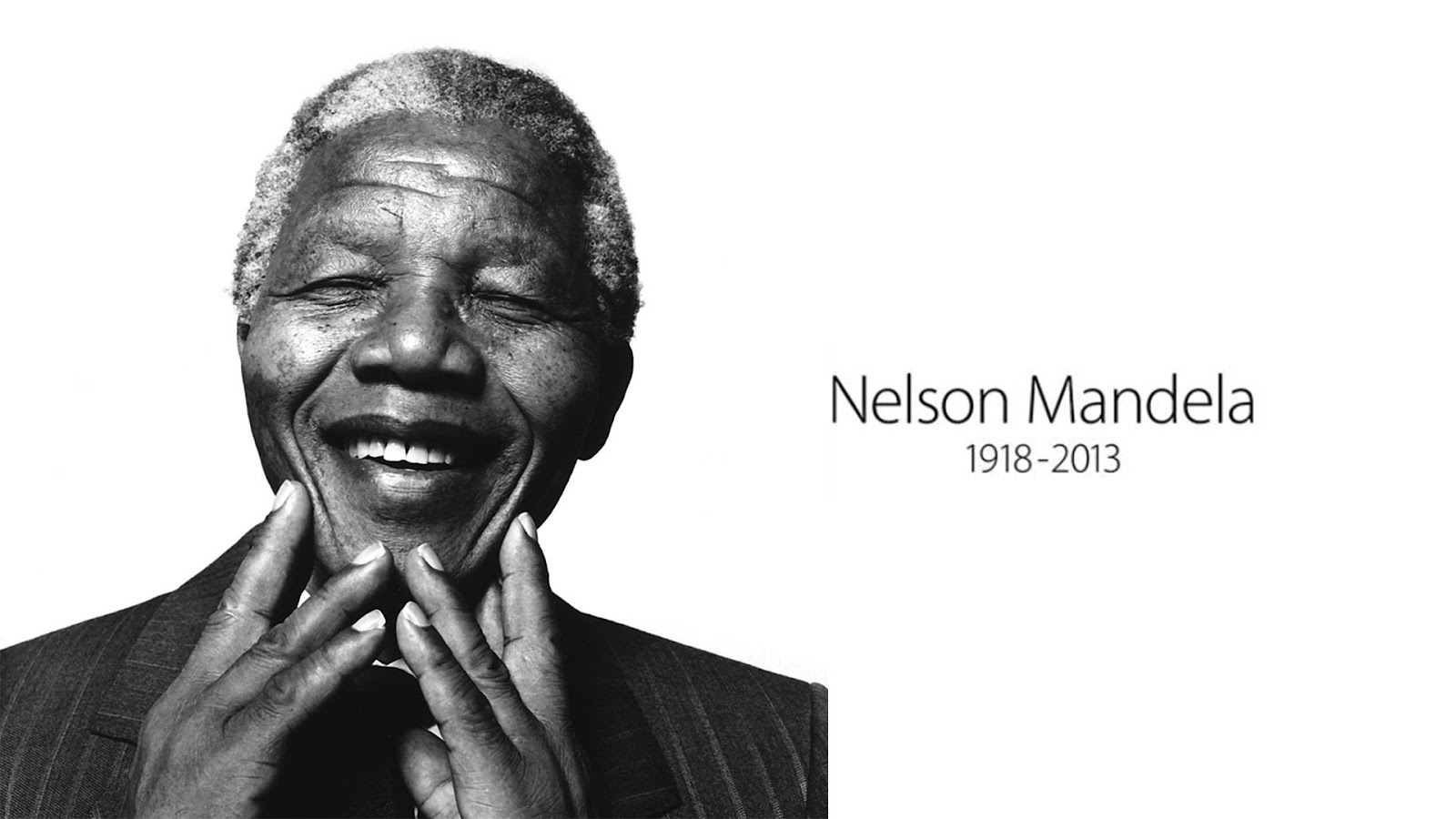
Nelson Mandela

Nelson Rolihlahla Mandela (18 July 1918 – 5 December 2013) was a South African anti-apartheid revolutionary, political leader, and philanthropist who served as President of South Africa from 1994 to 1999. He was the country's first black head of state and the first elected in a fully representative democratic election. His government focused on dismantling the legacy of apartheid by tackling institutionalised racism and fostering racial reconciliation. Ideologically an African nationalist and socialist, he served as President of the African National Congress (ANC) party from 1991 to 1997. 


A Xhosa, Mandela was born to the Thembu royal family in Mvezo, British South Africa. He studied law at the University of Fort Hare and the University of the Witwatersrand before working as a lawyer in Johannesburg. There he became involved in anti-colonial and African nationalist politics, joining the ANC in 1943 and co-founding its Youth League in 1944. After the National Party's white-only government established apartheid, a system of racial segregation that privileged whites, he and the ANC committed themselves to its overthrow. Mandela was appointed President of the ANC's Transvaal branch, rising to prominence for his involvement in the 1952 Defiance Campaign and the 1955 Congress of the People. He was repeatedly arrested for seditious activities and was unsuccessfully prosecuted in the 1956 Treason Trial. Influenced by Marxism, he secretly joined the banned South African Communist Party (SACP). Although initially committed to non-violent protest, in association with the SACP he co-founded the militant Umkhonto we Sizwe in 1961 and led a sabotage campaign against the government. He was arrested and imprisoned in 1962, and subsequently sentenced to life imprisonment for conspiring to overthrow the state following the Rivonia Trial.


Mandela served 27 years in prison, split between Robben Island, Pollsmoor Prison, and Victor Verster Prison. Amid growing domestic and international pressure, and with fears of a racial civil war, President F. W. de Klerk released him in 1990. Mandela and de Klerk led efforts to negotiate an end to apartheid, which resulted in the 1994 multiracial general election in which Mandela led the ANC to victory and became President. Leading a broad coalition government which promulgated a new constitution, Mandela emphasised reconciliation between the country's racial groups and created the Truth and Reconciliation Commission to investigate past human rights abuses. Economically, Mandela's administration retained its predecessor's liberal framework despite his own socialist beliefs, also introducing measures to encourage land reform, combat poverty, and expand healthcare services. Internationally, he acted as mediator in the Pan Am Flight 103 bombing trial and served as Secretary-General of the Non-Aligned Movement from 1998 to 1999. He declined a second presidential term, and in 1999 was succeeded by his deputy, Thabo Mbeki. Mandela became an elder statesman and focused on combating poverty and HIV/AIDS through the charitable Nelson Mandela Foundation. 


Mandela was a controversial figure for much of his life. Although critics on the right denounced him as a communist terrorist and those on the radical left deemed him too eager to negotiate and reconcile with apartheid's supporters, he gained international acclaim for his activism. Widely regarded as an icon of democracy and social justice, he received more than 250 honours—including the Nobel Peace Prize—and became the subject of a cult of personality. He is held in deep respect within South Africa, where he is often referred to by his Xhosa clan name, Madiba, and described as the "Father of the Nation".


Saturday, September 15, 2018

Bill Gates

William Henry Gates III KBE (born October 28, 1955) is an American business magnate, investor, author, philanthropist, humanitarian, and principal founder of Microsoft Corporation. During his career at Microsoft, Gates held the positions of chairman, CEO and chief software architect, while also being the largest individual shareholder until May 2014.

Image result for Bill Gates

In 1975, Gates and Paul Allen launched Microsoft, which became the world's largest PC software company. Gates led the company as chief executive officer until stepping down in January 2000, but he remained as chairman and created the position of chief software architect for himself. In June 2006, Gates announced that he would be transitioning from full-time work at Microsoft to part-time work and full-time work at the Bill & Melinda Gates Foundation, which was established in 2000. He gradually transferred his duties to Ray Ozzie and Craig Mundie. He stepped down as chairman of Microsoft in February 2014 and assumed a new post as technology adviser to support the newly appointed CEO Satya Nadella.

Image result for Bill Gates

Gates is one of the best-known entrepreneurs of the personal computer revolution. He has been criticized for his business tactics, which have been considered anti-competitive. This opinion has been upheld by numerous court rulings.
Since 1987, Gates has been included in the Forbes list of the world's wealthiest people, an index of the wealthiest documented individuals, excluding and ranking against those with wealth that is not able to be completely ascertained. From 1995 to 2017, he held the Forbes title of the richest person in the world all but four of those years, and held it consistently from March 2014 – July 2017, with an estimated net worth of US$89.9 billion as of October 2017. However, on July 27, 2017, and since October 27, 2017, he has been surpassed by Amazon founder and CEO Jeff Bezos, who had an estimated net worth of US$90.6 billion at the time. As of August 6, 2018, Gates had a net worth of $95.4 billion, making him the second-richest person in the world, behind Bezos.

Image result for Bill Gates

Later in his career and since leaving Microsoft, Gates pursued a number of philanthropic endeavors. He donated large amounts of money to various charitable organizations and scientific research programs through the Bill & Melinda Gates Foundation. In 2009, Gates and Warren Buffett founded The Giving Pledge, whereby they and other billionaires pledge to give at least half of their wealth to philanthropy. The foundation works to save lives and improve global health, and is working with Rotary International to eliminate polio.

Image result for Bill Gates

Friday, September 14, 2018

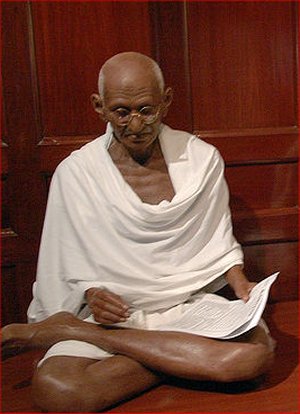
Mahatma Gandhi

Mohandas Karamchand Gandhi (2 October 1869 – 30 January 1948) was an Indian activist who was the leader of the Indian independence movement against British rule. Employing nonviolent civil disobedience, Gandhi led India to independence and inspired movements for civil rights and freedom across the world. The honorific Mahātmā (Sanskrit: "high-souled", "venerable") – applied to him first in 1914 in South Africa – is now used worldwide. In India, he is also called Bapu (Gujarati: endearment for father, papa) and Gandhi ji, and known as the Father of the Nation.

Image result for mahatma gandhi

Born and raised in a Hindu merchant caste family in coastal Gujarat, India, and trained in law at the Inner Temple, London, Gandhi first employed nonviolent civil disobedience as an expatriate lawyer in South Africa, in the resident Indian community's struggle for civil rights. After his return to India in 1915, he set about organising peasants, farmers, and urban labourers to protest against excessive land-tax and discrimination. Assuming leadership of the Indian National Congress in 1921, Gandhi led nationwide campaigns for various social causes and for achieving Swaraj or self-rule.

Image result for mahatma gandhi

Gandhi famously led Indians in challenging the British-imposed salt tax with the 400 km (250 mi) Dandi Salt March in 1930, and later in calling for the British to Quit India in 1942. He was imprisoned for many years, upon many occasions, in both South Africa and India. He lived modestly in a self-sufficient residential community and wore the traditional Indian dhoti and shawl, woven with yarn hand-spun on a charkha. He ate simple vegetarian food, and also undertook long fasts as a means of both self-purification and political protest.

Image result for mahatma gandhi

Gandhi's vision of an independent India based on religious pluralism, however, was challenged in the early 1940s by a new Muslim nationalism which was demanding a separate Muslim homeland carved out of India. Eventually, in August 1947, Britain granted independence, but the British Indian Empire was partitioned into two dominions, a Hindu-majority India and Muslim-majority Pakistan. As many displaced Hindus, Muslims, and Sikhs made their way to their new lands, religious violence broke out, especially in the Punjab and Bengal. Eschewing the official celebration of independence in Delhi, Gandhi visited the affected areas, attempting to provide solace. In the months following, he undertook several fasts unto death to stop religious violence. The last of these, undertaken on 12 January 1948 when he was 78, also had the indirect goal of pressuring India to pay out some cash assets owed to Pakistan. Some Indians thought Gandhi was too accommodating. Among them was Nathuram Godse, a Hindu nationalist, who assassinated Gandhi on 30 January 1948 by firing three bullets into his chest. Captured along with many of his co-conspirators and collaborators, Godse and his co-conspirator Narayan Apte were tried, convicted and executed while many of their other accomplices were given prison sentences.

Image result for mahatma gandhi

Gandhi's birthday, 2 October, is commemorated in India as Gandhi Jayanti, a national holiday, and worldwide as the International Day of Nonviolence.

Wednesday, September 12, 2018

John F. Kennedy

John Fitzgerald Kennedy (May 29, 1917 – November 22, 1963), commonly referred to by his initials JFK, was an American politician who served as the 35th President of the United States from January 1961 until his assassination in November 1963. He served at the height of the Cold War, and the majority of his presidency dealt with managing relations with the Soviet Union. As a member of the Democratic Party, Kennedy represented the state of Massachusetts in the United States House of Representatives and the U.S. Senate prior to becoming president.

Image result for John F. Kennedy

Kennedy was born in Brookline, Massachusetts, to Joseph P. Kennedy Sr. and Rose Kennedy. He graduated from Harvard University in 1940 and joined the U.S. Naval Reserve the following year. During World War II, he commanded a series of PT boats in the Pacific theater and earned the Navy and Marine Corps Medal for his service. After the war, Kennedy represented the 11th congressional district of Massachusetts in the U.S. House of Representatives from 1947 to 1953. He was subsequently elected to the U.S. Senate and served as the junior Senator from Massachusetts from 1953 to 1960. While in the Senate, he published his book entitled Profiles in Courage, which won a Pulitzer Prize for Biography. In the 1960 presidential election, Kennedy narrowly defeated Republican opponent Richard Nixon, who was the incumbent Vice President. At age 43, he became the youngest man to be elected as U.S. president as well as being the first (and only) Roman Catholic to occupy that office.

Image result for John F. Kennedy

Kennedy's time in office was marked by high tensions with communist states in the Cold War. He increased the number of American military advisers in South Vietnam by a factor of 18 over President Dwight D. Eisenhower. In April 1961, he authorized a failed joint-CIA attempt to overthrow the Cuban government of Fidel Castro in the Bay of Pigs Invasion. He subsequently rejected Operation Northwoods plans by the Joint Chiefs of Staff to orchestrate false flag attacks on American soil in order to gain public approval for a war against Cuba. In October 1962, U.S. spy planes discovered that Soviet missile bases had been deployed in Cuba; the resulting period of tensions, termed the Cuban Missile Crisis, nearly resulted in the breakout of a global thermonuclear conflict. Domestically, Kennedy presided over the establishment of the Peace Corps and supported the civil rights movement, but he was largely unsuccessful in passing his New Frontier domestic policies.

Image result for John F. Kennedy

On November 22, 1963, Kennedy was assassinated in Dallas, Texas. Lee Harvey Oswald was arrested for the state crime, but he was never prosecuted due to his murder by Jack Ruby two days later; Ruby was sentenced to death and died while the sentence was on appeal in 1967. Pursuant to the Presidential Succession Act, Vice President Lyndon B. Johnson was sworn in as president later that day. Both the FBI and the Warren Commission officially concluded that Oswald had acted alone in the assassination, but various groups challenged the findings of the Warren Report and believed that Kennedy was the victim of a conspiracy. After Kennedy's death, Congress enacted many of his proposals, including the Civil Rights and the Revenue Acts of 1964. Kennedy continues to rank highly in historians' polls of U.S. presidents and with the general public. His average approval rating of 70% is the highest of any president in Gallup's history of systematically measuring job approval.

Image result for John F. Kennedy

Albert Einstein

Albert Einstein (14 March 1879 – 18 April 1955) was a German-born theoretical physicist who developed the theory of relativity, one of the two pillars of modern physics (alongside quantum mechanics). His work is also known for its influence on the philosophy of science. He is best known to the general public for his mass–energy equivalence formula E = mc2, which has been dubbed "the world's most famous equation". He received the 1921 Nobel Prize in Physics "for his services to theoretical physics, and especially for his discovery of the law of the photoelectric effect", a pivotal step in the development of quantum theory.

Image result for albert einstein

Near the beginning of his career, Einstein thought that Newtonian mechanics was no longer enough to reconcile the laws of classical mechanics with the laws of the electromagnetic field. This led him to develop his special theory of relativity during his time at the Swiss Patent Office in Bern (1902–1909), Switzerland. However, he realized that the principle of relativity could also be extended to gravitational fields, and he published a paper on general relativity in 1916 with his theory of gravitation. He continued to deal with problems of statistical mechanics and quantum theory, which led to his explanations of particle theory and the motion of molecules. He also investigated the thermal properties of light which laid the foundation of the photon theory of light. In 1917, he applied the general theory of relativity to model the structure of the universe.

Image result for albert einstein

Einstein lived in Switzerland between 1895 and 1914, except for one year in Prague, and he received his academic diploma from the Swiss federal polytechnic school (later the Eidgenössische Technische Hochschule, ETH) in Zürich in 1900. He acquired Swiss citizenship in 1901, which he kept for the rest of his life after being stateless for more than five years. In 1905, he was awarded a PhD by the University of Zurich. The same year, he published four groundbreaking papers during his renowned annus mirabilis (miracle year) which brought him to the notice of the academic world at the age of 26. Einstein taught theoretical physics at Zurich between 1912 and 1914 before he left for Berlin, where he was elected to the Prussian Academy of Sciences.

Image result for Einstein lived in Switzerland between 1895 and 1914

In 1933, while Einstein was visiting the United States, Adolf Hitler came to power. Because of his Jewish background, Einstein did not return to Germany. He settled in the United States and became an American citizen in 1940. On the eve of World War II, he endorsed a letter to President Franklin D. Roosevelt alerting him to the potential development of "extremely powerful bombs of a new type" and recommending that the US begin similar research. This eventually led to the Manhattan Project. Einstein supported the Allied forces, but he generally denounced the idea of using nuclear fission as a weapon. He signed the Russell–Einstein Manifesto with British philosopher Bertrand Russell, which highlighted the danger of nuclear weapons. He was affiliated with the Institute for Advanced Study in Princeton, New Jersey, until his death in 1955.

Image result for Einstein death in 1955

Einstein published more than 300 scientific papers and more than 150 non-scientific works. His intellectual achievements and originality have made the word "Einstein" synonymous with "genius". Eugene Wigner wrote of Einstein in comparison to his contemporaries that "Einstein's understanding was deeper even than Jancsi von Neumann's. His mind was both more penetrating and more original than von Neumann's. And that is a very remarkable statement."

Image result for Einstein published more than 300 scientific papers and more than 150 non-scientific works

Abraham Lincoln

Abraham Lincoln (February 12, 1809 – April 15, 1865) was an American statesman and lawyer who served as the 16th President of the United States from March 1861 until his assassination in April 1865. Lincoln led the United States through the American Civil War—its bloodiest war and perhaps its greatest moral, constitutional, and political crisis. In doing so, he preserved the Union, abolished slavery, strengthened the federal government, and modernized the economy.

Image result for abraham lincoln

Born in Hodgenville, Kentucky, Lincoln grew up on the western frontier in Kentucky and Indiana. Largely self-educated, he became a lawyer in Illinois, a Whig Party leader, and was elected to the Illinois House of Representatives, in which he served for eight years. Elected to the United States House of Representatives in 1846, Lincoln promoted rapid modernization of the economy and opposed the Mexican–American War. After a single term, he returned to Illinois and resumed his successful law practice. Reentering politics in 1854, he became a leader in building the new Republican Party, which had a statewide majority in Illinois. As part of the 1858 campaign for US Senator from Illinois, Lincoln took part in a series of highly publicized debates with his opponent and rival, Democrat Stephen A. Douglas; Lincoln spoke out against the expansion of slavery, but lost the race to Douglas. In 1860, Lincoln secured the Republican Party presidential nomination as a moderate from a swing state, though most delegates originally favored other candidates. Though he gained very little support in the slaveholding states of the South, he swept the North and was elected president in 1860.

Image result for abraham lincoln


Though there were attempts to bridge the differences between North and South, ultimately Lincoln's victory prompted seven southern slave states to secede from the United States and form the Confederate States of America before he moved into the White House. U.S. troops refused to leave Fort Sumter, a fort located in Charleston, South Carolina, after the secession of the Southern States. The resulting Confederate attack on Fort Sumter inspired the North to rally behind the Union. As the leader of the moderate faction of the Republican Party, Lincoln confronted Radical Republicans, who demanded harsher treatment of the South; War Democrats, who rallied a large faction of former opponents into his camp; anti-war Democrats (called Copperheads), who despised him; and irreconcilable secessionists, who plotted his assassination. Lincoln fought back by pitting his opponents against each other, by carefully planned political patronage and by appealing to the American people with his powers of oratory. His Gettysburg Address became an iconic endorsement of nationalism, republicanism, equal rights, liberty, and democracy. He suspended habeas corpus, leading to the controversial Ex parte Merryman decision, and he averted potential British intervention by defusing the Trent Affair. Lincoln closely supervised the war effort, especially the selection of generals, including his most successful general, Ulysses S. Grant. He made major decisions on Union war strategy, including a naval blockade that shut down the South's trade. As the war progressed, his complex moves toward ending slavery included the Emancipation Proclamation of 1863; Lincoln used the U.S. Army to protect escaped slaves, encouraged the border states to outlaw slavery, and pushed through Congress the Thirteenth Amendment to the United States Constitution, which permanently outlawed slavery.

Image result for abraham lincoln

An astute politician deeply involved with power issues in each state, Lincoln reached out to the War Democrats and managed his own re-election campaign in the 1864 presidential election. Anticipating the war's conclusion, Lincoln pushed a moderate view of Reconstruction, seeking to reunite the nation speedily through a policy of generous reconciliation in the face of lingering and bitter divisiveness. On April 14, 1865, five days after the surrender of Confederate general Robert E. Lee, Lincoln was shot by Confederate sympathizer John Wilkes Booth and died the next day. Lincoln has been consistently ranked both by scholars and the public as among the greatest U.S. presidents.

Image result for how did abraham lincoln die